
PMDD as a Neuroendocrine Sensitivity Disorder
Understanding the Hormonal, Neurotransmitter and Stress Connections Behind Premenstrual Dysphoric Disorder
Premenstrual Dysphoric Disorder (PMDD) is far more than severe PMS. It is increasingly understood as a complex neuroendocrine sensitivity disorder, in which the brain and nervous system respond differently to the natural hormonal fluctuations of the menstrual cycle.
Contrary to the common assumption that premenstrual symptoms are simply caused by a hormonal imbalance, research suggests that women with PMDD may have relatively normal circulating levels of oestrogen and progesterone. The difference lies in how the brain responds to changes in these hormones, particularly during the luteal phase.
These fluctuations influence neurotransmitter signalling, stress responsiveness, emotional regulation, sleep and cognitive function. For women experiencing PMDD, the consequences can be significant. Symptoms may interfere with relationships, work, emotional wellbeing and the ability to feel connected to themselves for a substantial portion of every month.
Understanding the physiological mechanisms behind PMDD offers an important starting point for developing more individualised and effective treatment strategies.
What Is PMDD?
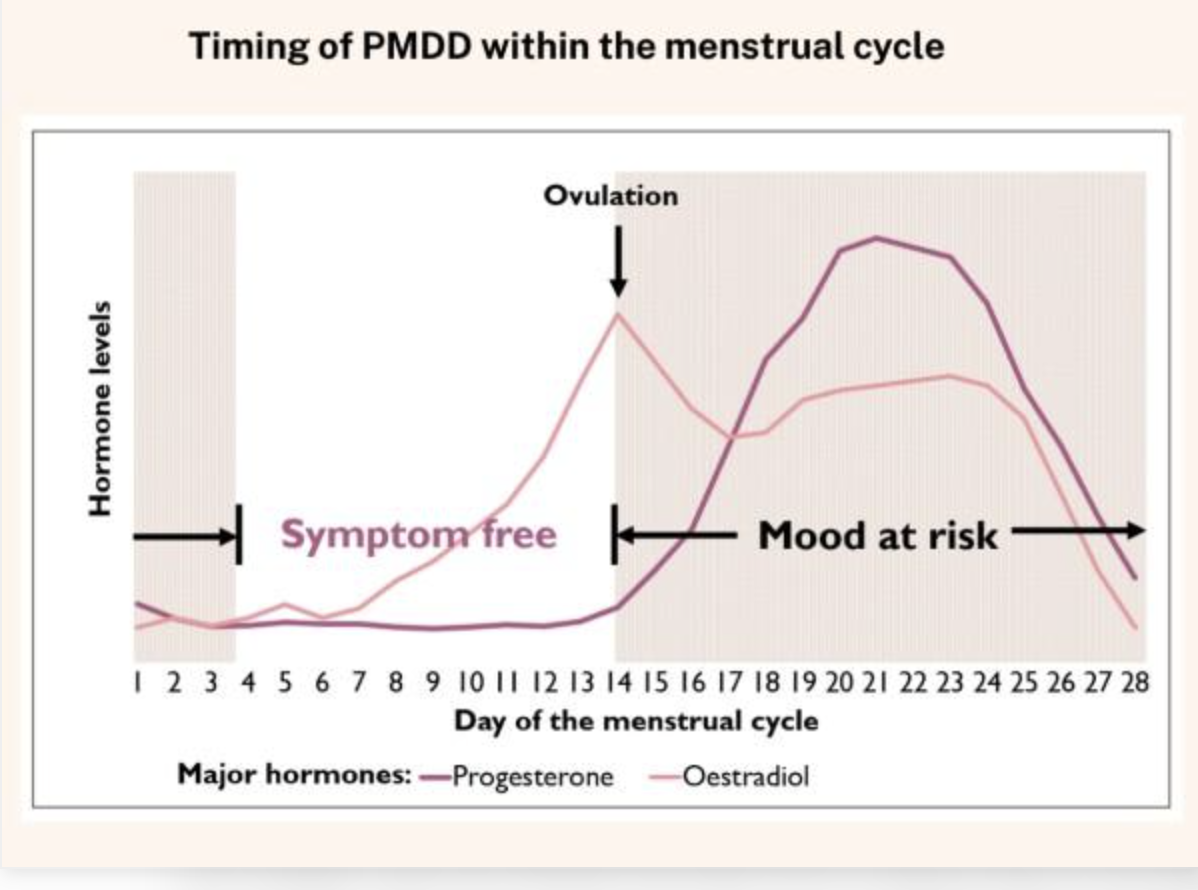
PMDD is a severe cyclical mood disorder characterised by emotional, cognitive and physical symptoms that emerge during the luteal phase of the menstrual cycle, typically within the final one to two weeks before menstruation. Symptoms generally improve within the first few days of bleeding, with a relatively symptom-free interval following menstruation.
Common symptoms include:
Severe mood swings and emotional sensitivity
Anxiety, heightened stress or panic
Irritability, anger and interpersonal conflict
Depression, sadness or feelings of hopelessness
Fatigue and reduced motivation
Brain fog, poor concentration and cognitive difficulties
Sleep disturbances
Changes in appetite and food cravings
Bloating, breast tenderness and headaches
Feeling overwhelmed by situations that would otherwise be manageable
PMDD is estimated to affect approximately 2–6% of menstruating women, depending on the diagnostic criteria used.
Unlike premenstrual exacerbation of an existing mood disorder, PMDD is distinguished by its cyclical presentation and a clear reduction in symptoms following menstruation. However, the two conditions can coexist, making careful assessment important.
Hormonal Sensitivity Rather Than Hormonal Imbalance
One of the most important developments in our understanding of PMDD is the recognition that symptoms are not necessarily caused by abnormal hormone concentrations.
Instead, PMDD appears to involve an altered sensitivity to the normal fluctuations of reproductive hormones. Throughout the menstrual cycle, oestrogen and progesterone rise and fall in a carefully coordinated pattern.
Following ovulation, progesterone increases and is subsequently metabolised into several neuroactive compounds, including allopregnanolone. These compounds interact directly with the central nervous system and influence mood, stress responses and emotional regulation.
In women with PMDD, the nervous system appears to respond differently to these hormonal changes, potentially producing symptoms of anxiety, irritability, emotional instability and depression.
It also explains why a standard reproductive hormone blood test may appear unremarkable despite significant premenstrual distress.
Progesterone, Allopregnanolone and GABA
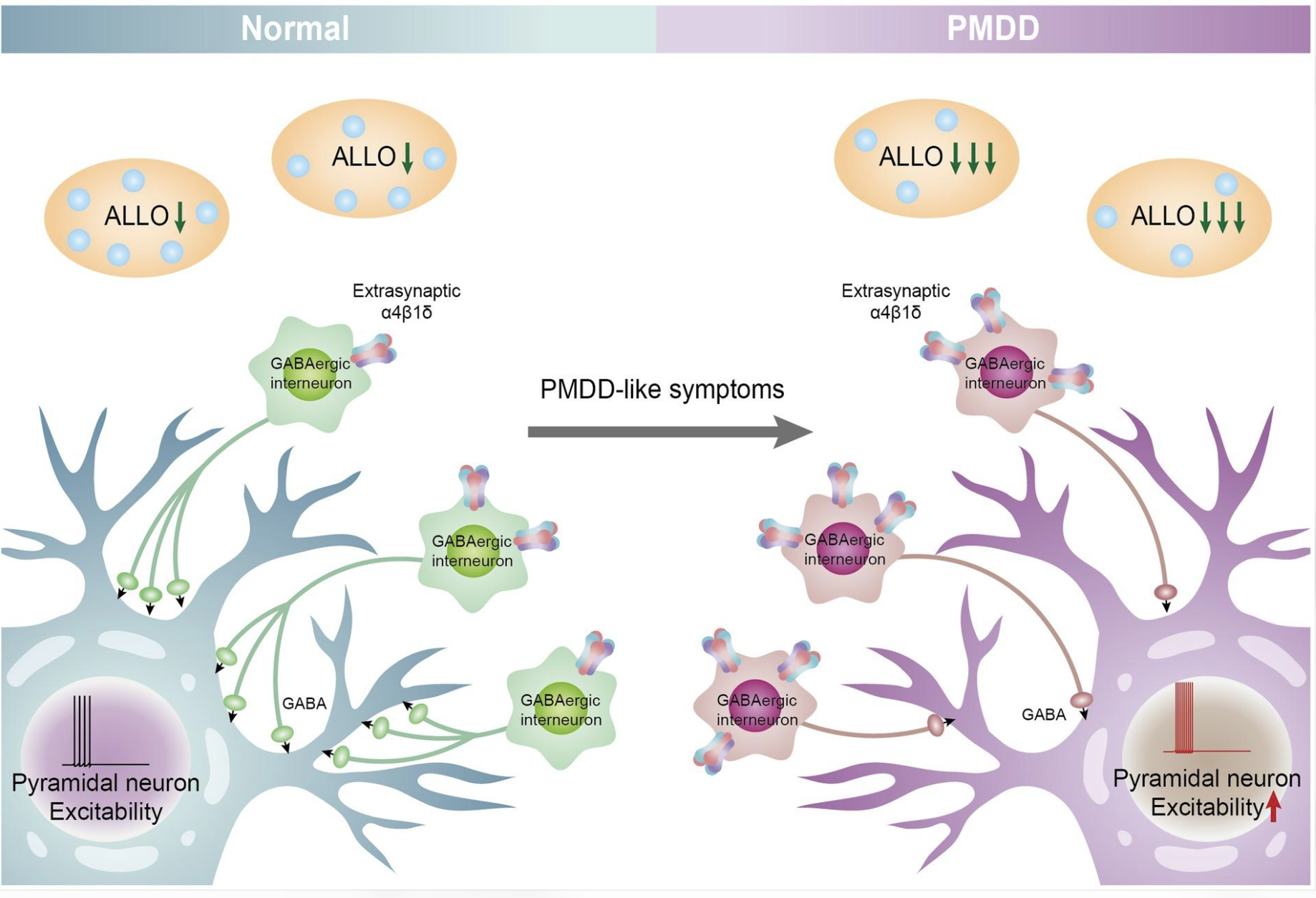
One of the most extensively studied mechanisms in PMDD involves the relationship between progesterone, its metabolite allopregnanolone and the neurotransmitter GABA.
GABA (gamma-aminobutyric acid) is the brain's primary inhibitory neurotransmitter. It helps regulate neuronal excitability and plays an important role in promoting calmness, sleep and emotional stability.
Allopregnanolone is a neurosteroid produced from progesterone that interacts with GABA-A receptors. Under typical circumstances, allopregnanolone enhances GABA-A receptor activity, producing calming and anxiolytic effects.
However, research suggests that women with PMDD may experience an altered response to changing allopregnanolone concentrations. Rather than consistently experiencing the expected calming effects, fluctuations in this neurosteroid may be associated with increased anxiety, irritability and emotional reactivity.
This does not necessarily mean that women with PMDD have insufficient GABA or progesterone. Instead, altered receptor sensitivity and adaptation to hormonal changes may contribute to symptoms.
The issue may be less about the quantity of a hormone and more about the nervous system's response to it.
This is one reason why simply supplementing progesterone is not an established treatment for PMDD and may worsen symptoms in some individuals.
Oestrogen, Serotonin and Emotional Regulation
Oestrogen has a significant influence on brain function, particularly through its interactions with serotonin, dopamine and other neurotransmitter systems.
Serotonin contributes to mood stability, emotional processing, sleep, appetite and impulse regulation. Oestrogen can influence serotonin synthesis, receptor activity and neurotransmitter availability. During the menstrual cycle, changing oestrogen concentrations may therefore influence serotonergic signalling.
In women with PMDD, sensitivity to these hormonal changes may contribute to symptoms such as:
Depressed mood and emotional vulnerability
Irritability and heightened sensitivity to stress
Changes in appetite and cravings
Sleep disturbances
Reduced emotional resilience
However, PMDD should not be understood simply as a serotonin deficiency. The interaction between reproductive hormones, neurotransmitter signalling and individual neurobiological sensitivity is considerably more complex.
Stress and the Nervous System
One of the areas I pay particular attention to when working with women experiencing PMDD is their broader nervous system health.
The hypothalamic-pituitary-adrenal (HPA) axis is responsible for coordinating our physiological response to stress. It influences cortisol secretion, sleep, energy regulation, immune function and our ability to adapt to physical and psychological demands.
Interestingly, some research has identified a blunted cortisol response to stress in women with PMDD, particularly during the late luteal phase. This suggests that rather than simply having elevated stress hormones, some women may experience altered HPA-axis reactivity, potentially influencing their ability to physiologically adapt to stress during this phase of the menstrual cycle. However, findings remain mixed, and this response is not observed in all women with PMDD.
However, we do know that sleep deprivation, chronic stress and nutritional deficiences can affect emotional wellbeing and make existing symptoms more difficult to manage.
In practice, I want to understand:
What does your stress response look like throughout the month?
Are you sleeping well, and does your sleep change before menstruation?
Do you experience anxiety throughout the cycle, or predominantly after ovulation?
Are you eating regularly and adequately?
Do you feel noticeably less resilient to stress during the luteal phase?
Are there periods of the month when your energy, mood and concentration are significantly better?
While nervous system regulation doesn't necessarily address the underlying neurosteroid sensitivity, it may be an important part of supporting overall wellbeing and managing the impact of symptoms.
Clinical Considerations
Although PMDD is primarily associated with neuroendocrine sensitivity, several factors may influence symptom severity and should be considered during clinical assessment.
Nutritional status: Calcium, magnesium, B6, B12, iron and omega-3 intake, alongside overall nutritional adequacy and their roles in neurological function.
Stress and trauma history: HPA-axis regulation, chronic stress, PTSD/C-PTSD and the potential for premenstrual exacerbation of existing symptoms.
Thyroid function: Screening for thyroid dysfunction where indicated, particularly with fatigue, anxiety, depression or menstrual irregularities.
Sleep and circadian rhythm: Changes in sleep quality, insomnia, fatigue and stress tolerance throughout the menstrual cycle.
Metabolic and digestive health: Blood glucose regulation, appetite changes, dietary patterns and coexisting digestive disturbances.
Reproductive health: Cycle regularity, ovulation, menstrual symptoms and coexisting conditions such as endometriosis or PCOS.
The aim is to identify factors that may be amplifying symptoms, distinguish PMDD from overlapping conditions and develop an individualised treatment approach.
Seeking Support for PMDD?
At OSTARA Seasonal Therapy, I offer individualised, evidence-informed naturopathic care for women experiencing PMDD, severe PMS and other menstrual health concerns.
My approach combines clinical assessment, nutritional and herbal medicine, pathology interpretation where indicated, and Japanese Yoga Therapy to explore the factors influencing your health and develop a practical, personalised treatment plan.
If you experience significant emotional or physical changes in the lead-up to your period, and want to better understand what may be contributing to your symptoms, I welcome you to book an initial consultation.
Book a consultation: www.ostaraseasonal.com
This article is intended for education and does not replace medical diagnosis or treatment. PMDD can involve severe depression and suicidal thoughts. If you are experiencing thoughts of self-harm or feel unsafe, seek immediate professional support. In Australia, Lifeline is available on 13 11 14, or call 000 in an emergency.